Gerstle Cove
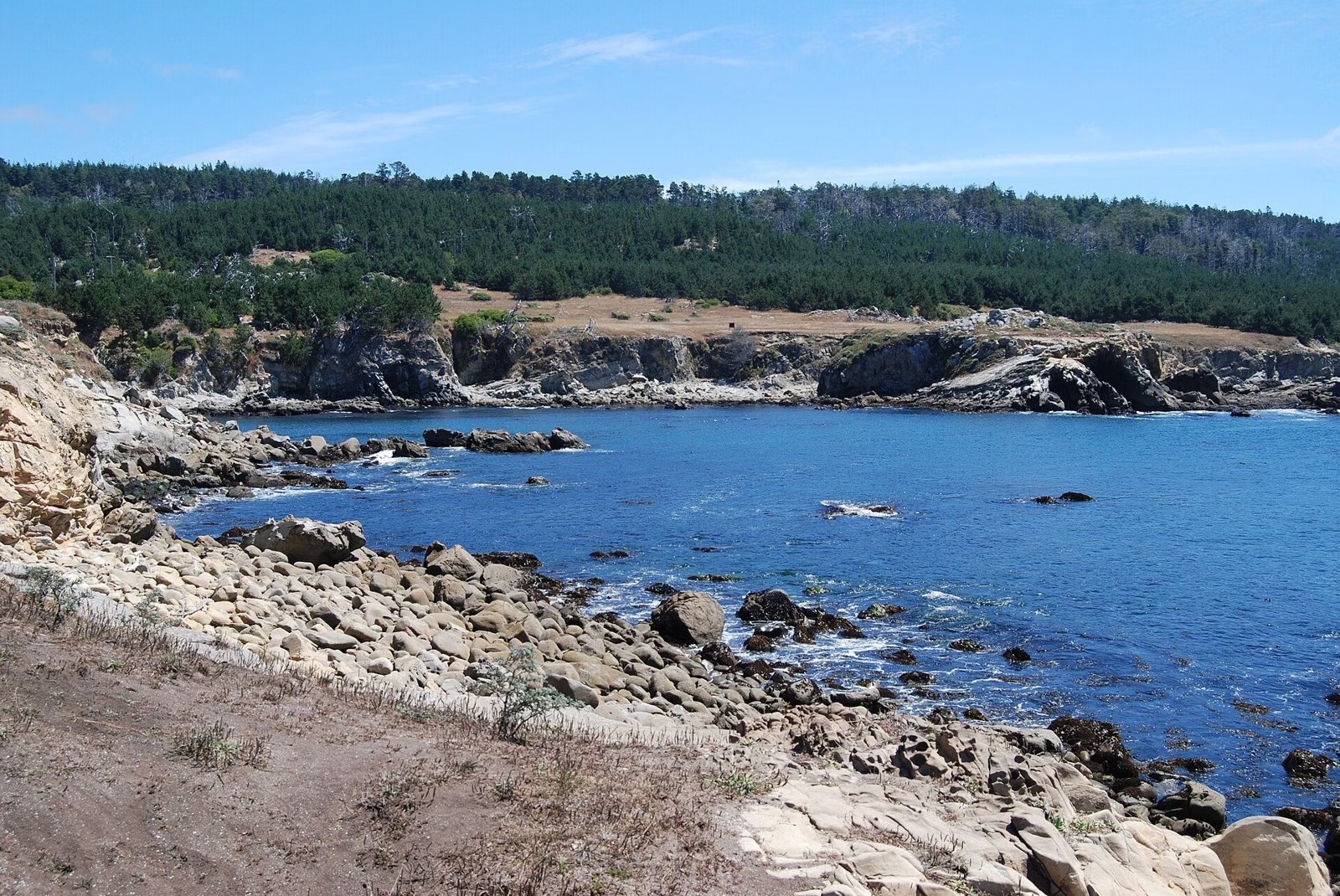
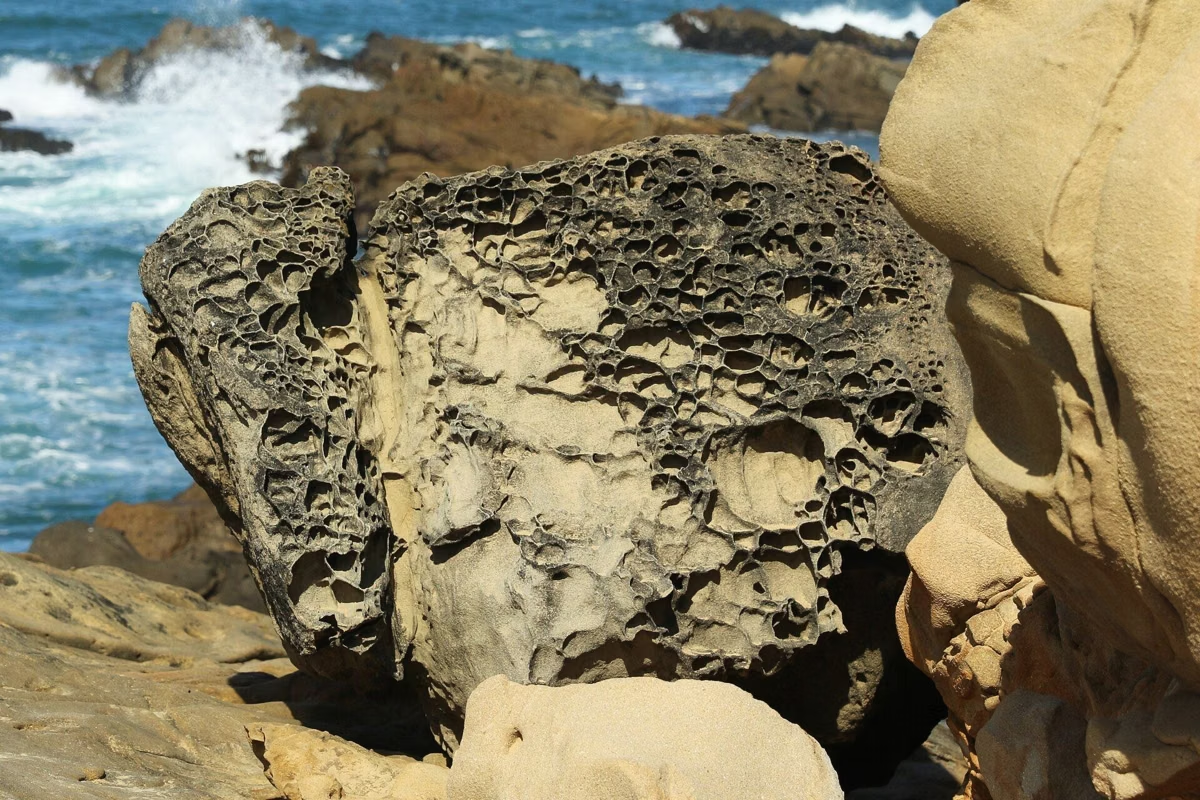
Gerstle Cove is a sheltered cove on the Salt Point State Park coast and one of California's oldest marine protected areas: the Gerstle Cove State Marine Reserve, protected since 1971. Nothing living may be taken from it, so it is a place to look rather than fish. The day-use area above the cove has accessible parking, restrooms and tables, and at low tide the rocks hold tide pools. The sandstone here is carved into honeycomb tafoni and still shows marks from 1800s quarrying.
Gerstle Cove Facts
The Marine Reserve
California State Parks lists four marine protected areas off Salt Point. Gerstle Cove is one of the two no-take reserves; Stewarts Point is the other. In the State Marine Reserve, "take of all living marine resources is prohibited." State Parks says red abalone, sea urchins and shore crabs thrive in the cove's protected tide pools.
The reserve's edges are marked on the shore with a yellow pole at the north end and yellow paint at the south end. Outside it, the much larger Salt Point State Marine Conservation Area allows only the recreational take of finfish. The fishing and diving page covers what is allowed where.
Tide Pools
At low tide the rocks around the cove expose tide pools. State Parks names red abalone, sea urchins and shore crabs in the cove's protected pools, and the brochure (PDF) lists sea stars, mussels and small fish in north-coast tide pools generally. State Parks asks for a light touch: even turning over a rock can kill the animals living under it by exposing them to the sun. Watch your footing on wet rock and stay out of reach of the waves; rogue waves are a year-round risk on this coast.
Sandstone, Quarry Marks and Tafoni
In the mid-1800s, sandstone cut at Salt Point went to build streets and buildings in San Francisco. At Gerstle Cove you can still see the iron eyebolts where ships anchored to load the slabs. On the marine terrace north of the cove, quarried blocks lie scattered with drill holes along their edges.
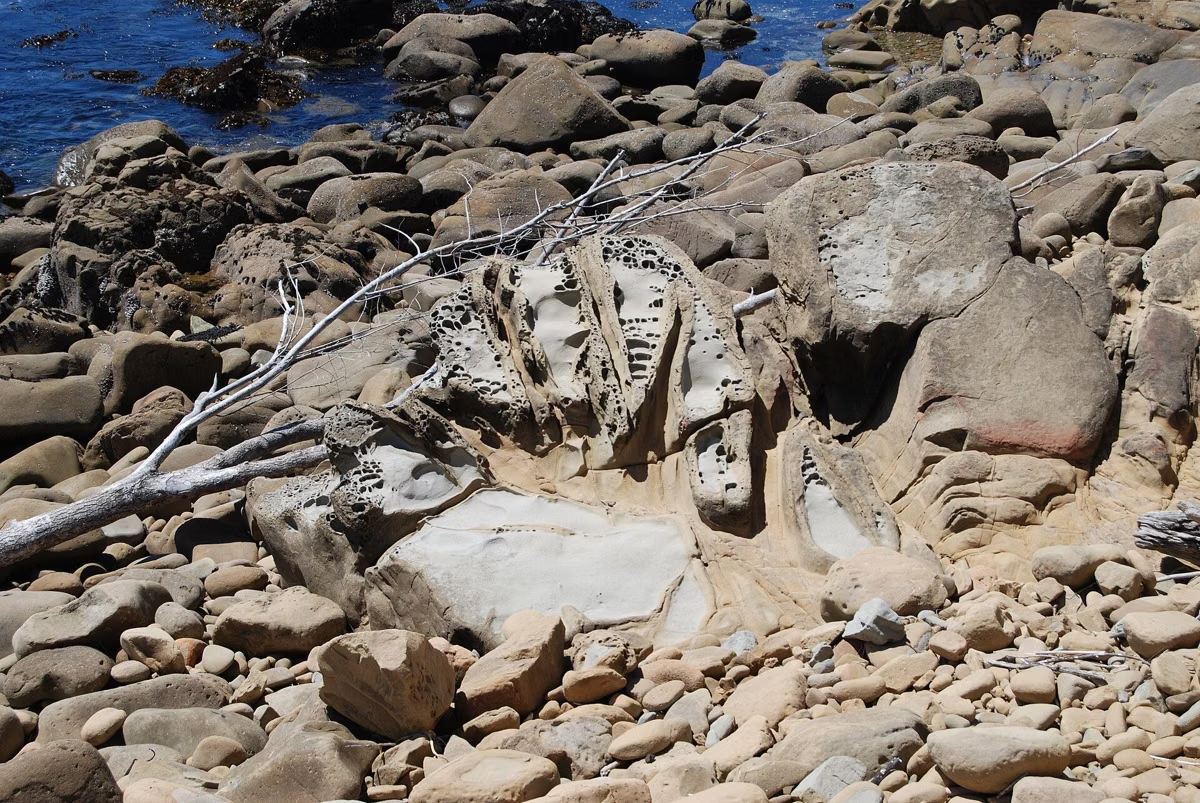
The same sandstone near the water has weathered into tafoni (Italian for "cavern"): a honeycomb of pits, knobs, ribs and ridges caused by seasonal wetting and drying. State Parks says it is common at Gerstle Cove and Fisk Mill Cove.
The Day-Use Area
Gerstle Cove's day-use area is the park's most accessible spot. State Parks lists three accessible picnic tables overlooking the cove, accessible parking, routes and a restroom, and a fish cleaning station. The Salt Point Trail's accessible section starts here along the bluffs, surfaced in asphalt and compacted soil with grades mostly under 5 percent. State Parks' accessibility page gives the accessible section as a 0.46-mile loop; the 2025 info sheet (PDF) and the brochure say one-tenth of a mile. The State Parks park page lists the vehicle day-use fee as $10.
Diving and Kayaking
State Parks describes Gerstle Cove as one of the first underwater parks in California and says divers come to explore the cove. The 2014 brochure says only kayaking, underwater photography and recreational diving are allowed inside the reserves. The cove gives shelter for hand-launching small boats, but the Gerstle Cove boat launch was listed as closed on November 20, 2026.
State Parks warns that the water at Salt Point should be entered only by very experienced, well-trained people, and it publishes kelp-entanglement advice for free divers. Abalone may not be taken anywhere in California's ocean waters until at least April 1, 2036, under CDFW rules.
Gerstle Cove FAQ
Can you fish at Gerstle Cove?
No. Gerstle Cove is a State Marine Reserve where taking any living marine resource is prohibited. Fishing with a license is allowed elsewhere along the park shore, between the Fisk Mill day-use lot and the south end of South Gerstle Point, for finfish only.
Can you see tide pools at Gerstle Cove?
Yes, at low tide. The rocks around the cove hold tide pools, where State Parks names red abalone, sea urchins and shore crabs. State Parks asks visitors not to turn rocks over or collect anything, and to stay back from the waves.
What is tafoni at Salt Point?
Tafoni is honeycomb erosion in sandstone: pits, knobs, ribs and ridges formed by seasonal wetting and drying. The name is Italian for "cavern." State Parks says it is common in the sandstone at the water's edge at Gerstle Cove and Fisk Mill Cove.
Is Gerstle Cove wheelchair accessible?
The day-use area is. State Parks lists accessible parking, a restroom, three accessible tables overlooking the cove and the accessible section of the Salt Point Trail from the lot (a 0.46-mile loop on the accessibility page; one-tenth of a mile on the info sheet).
Facts checked against the California State Parks page for Salt Point State Park on November 20, 2026.